Exploring the Role of Metal Foundries in Industrial Production
Metal foundries are fundamental in the realm of industrial production. They transform primary materials into crucial components that serve diverse industries, from aerospace to automotive. Sophisticated casting processes allow for the development of robust components that significantly improve performance and safety. Yet, as these facilities embrace new technologies and face environmental challenges, the outlook for these foundries is in question. The future of this essential industry is worth contemplating.
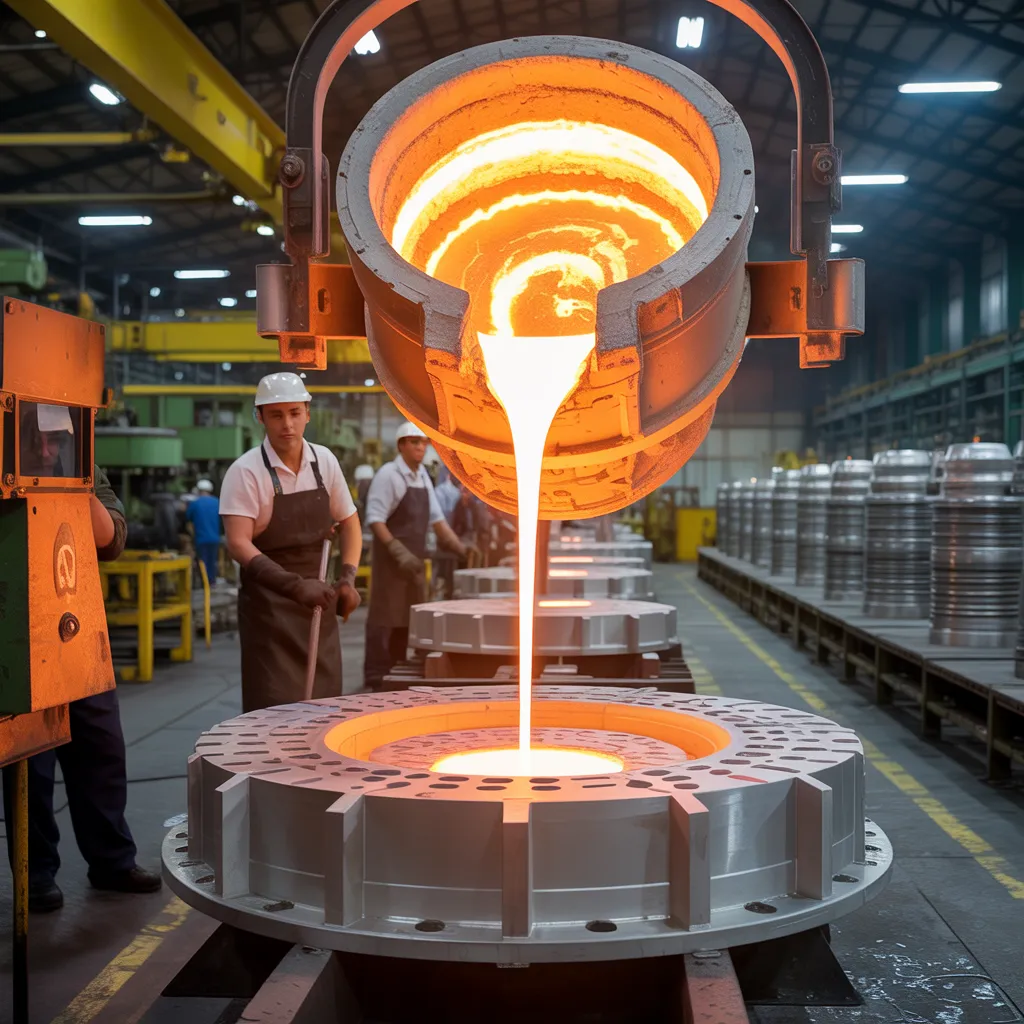
Exploring the Metal Casting Process
The metal casting process transforms molten metal into finished solid components using a variety of methods. This process begins with melting the metal, most commonly inside a furnace, where it complete article reaches a temperature suitable for casting. Once molten, the metal is poured into a mold, which determines the form of the finished component. Various methods such as die casting, sand casting, and investment casting are utilized, each offering unique advantages regarding precision and complexity.
Heat dissipation takes place as the liquid metal hardens within the mold, enabling it to assume the desired shape. Once the metal has solidified, the mold is taken away, and the casting is commonly put through finishing processes like mechanical processing or surface finishing to improve its characteristics. Understanding these fundamental steps is vital for optimizing production efficiency and guaranteeing the standard of the final components, making the metal casting process an integral part of present-day manufacturing operations.
The Historic Development of Metal Foundries
As societies progressed, the evolution of metal foundries was essential to industrial development. In the beginning, ancient societies employed simple smelting techniques to extract metals from ores, with proof of copper and bronze casting going back to 4000 BCE. The introduction of iron casting approximately 1200 BCE signified a notable change, making possible the development of more durable tools and weapons.
During the Middle Ages foundries advanced significantly with the introduction of sophisticated furnaces and casting molds, enabling greater manufacturing efficiency. The era of the Renaissance saw the integration of empirical methodologies into the craft of metalworking, improving both craftsmanship and accuracy.
The Industrial Revolution sparked the rapid expansion of metal foundries, as steam power and mechanization revolutionized manufacturing capabilities. By the late 19th century, foundries became essential to a wide range of industries, providing components for transportation, machinery, and infrastructure. This historical progression highlights the fundamental role of metal foundries in shaping modern industrial landscapes.
Uses of Metal Casting Across Industries
Metal casting serves a vital function in numerous industries, significantly influencing manufacturing processes. In the automotive sector, it is critical for producing parts that improve vehicle performance and safety. Similarly, uses in the aerospace sector and construction equipment production highlight the versatility and importance of metal casting in today's production landscape.
Automotive Parts Fabrication
In the realm of automotive component production, metal casting plays a essential role in manufacturing critical components that require both strength and precision. This method facilitates the production of elaborate designs, which are critical in components such as transmission housings, engine blocks, and suspension components. Through the use of materials such as aluminum and iron, producers can create components that are both light and resilient that boost overall vehicle performance and fuel efficiency. Modern casting methods, such as sand casting and die casting, support high-output production without compromising dimensional accuracy. Furthermore, the ability to recycle metal scrap within foundries supports sustainability efforts in the automotive industry. As the automotive industry progresses with innovative technologies, the demand for innovative casting solutions continues to grow, highlighting the critical role of metal foundries in automotive component production.
Aerospace Sector Applications
The aerospace sector places great emphasis on metal casting to produce essential parts that require exceptional strength and lightweight properties. Parts including turbine blades, structural frames, and engine parts are commonly produced with advanced casting techniques. Such methods enable intricate designs that enhance aerodynamics and performance while decreasing component weight. Substances including aluminum, titanium, and superalloys are widely employed owing to their excellent strength-to-weight characteristics and thermal resilience. Moreover, exact casting procedures provide tight tolerances, which are essential to safety and efficiency in aerospace applications. As the industry advances, developments in casting processes steadily elevate component performance, contributing to more fuel-efficient and reliable aircraft designs. This underscores the critical importance of metal foundries in driving aerospace innovation.
Construction Machinery Components
Several elements in building equipment are manufactured through cast metal production, illustrating its fundamental role in the industry. Key parts such as motor blocks, transmission housings, and body framework elements leverage the exactness and resilience that the casting process provides. The procedure supports complex geometries, which are critical for the effective functioning of heavy machinery. Additionally, metal casting materials such as steel and ductile iron supply the needed toughness to endure demanding operational environments. The capability to create significant numbers of pieces with uniform standards further enhances the durability of building machinery. As the need for durable and effective machines grows, the metal foundry sector remains integral to developing construction industry advancements, confirming that equipment fulfills established guidelines and operational expectations.
Cutting-Edge Technologies Transforming Foundry Production
As manufacturing increasingly demands greater efficiency and precision, innovative technologies are transforming foundry production. Advanced automation, particularly through robotics, is enhancing the speed and accuracy of metal casting processes. These automated robotic systems carry out repetitive operations with near-zero error rates, cutting labor costs and boosting output reliability.
Furthermore, the incorporation of 3D printing is redefining mold production, allowing for rapid prototyping and complex geometries that traditional methods cannot achieve. This advancement not only reduces lead times but also minimizes material waste.
Data analytics and the Internet of Things (IoT) are continuing to streamline operations by facilitating real-time oversight of equipment and workflows. These advancements enable predictive maintenance, decreasing downtime and improving overall operational productivity.
Combined, these breakthroughs are redefining the foundry production landscape, propelling manufacturers toward greater efficiency and precision in an increasingly competitive industrial environment.
Why Metal Foundries Must Prioritize Sustainability
Although metal foundries have historically prioritized production efficiency and cost-effectiveness, the rising importance of sustainability is redefining industry priorities. As worldwide consciousness of environmental concerns grows, foundries are acknowledging the importance of reducing their environmental impact. This shift is driven by regulatory pressures, consumer demand for greener products, and the long-term financial benefits of sustainable practices.
Adopting sustainable technologies and recycling practices helps preserve resources and lowers operational expenses. In addition, implementing sustainable practices elevates the profile of metal foundries, engaging partners and consumers who champion ecological responsibility.
Green practices in metal foundries additionally foster innovation; organizations are examining alternative materials and processes that minimize environmental impact. At its core, integrating sustainability is becoming vital for foundries to maintain competitiveness in a market that increasingly emphasizes environmental stewardship alongside established performance metrics.
What Obstacles Are Metal Foundries Encountering Today?
Metal foundries are actively facing a number of substantial challenges that affect their daily operations. Escalating energy costs and a persistent shortage of skilled labor present difficulties in manufacturing processes, while strict environmental compliance requirements impose additional compliance burdens. Addressing these issues is essential for sustaining the industry's growth and competitive advantage.
Increasing Energy Costs
Rising energy costs pose a significant challenge for metal foundries, influencing their production efficiency and financial viability. As energy costs continue to shift, foundries encounter higher costs tied to melting, casting, and finishing operations. These increasing costs may contribute to reduced profit margins, forcing some foundries to reconsider their pricing strategies or operational practices. Furthermore, the need for energy-intensive equipment and technology further exacerbates the financial strain. Foundries may feel driven to adopt energy-saving measures to reduce these costs; yet such investments demand considerable upfront capital. Additionally, the competitive landscape intensifies as foundries aim to maintain their market position while maneuvering through these economic pressures. Therefore, addressing energy cost management stands as an essential focus for ensuring the continued success of metal foundries.
Lack of Skilled Workers
With the growing demand for intricate metal components, foundries are struggling with a serious skilled labor deficit that undermines their production capacities. A large number of seasoned workers are leaving the industry, and there are not enough new workers to replace them. This deficit leads to higher labor expenses and production timeline disruptions. Foundries frequently struggle to draw in younger professionals, as the industry is perceived as less appealing compared to high-tech sectors. Furthermore, the technical expertise needed for metal casting and machining requires considerable time to cultivate, intensifying the challenge. Therefore, foundries could face obstacles in fulfilling market needs, affecting their competitive standing and financial performance. Addressing this shortage is essential for sustaining growth in the metal foundry industry.
Environmental Regulations Compliance
Compliance with environmental regulations poses significant challenges for foundries in today's industrial landscape. Such facilities are under increasing pressure to limit emissions and waste while integrating cleaner technologies. The complexity of regulations, which vary by region and often change, creates uncertainty and requires constant adaptation. Financial constraints further complicate compliance efforts, as investments in new equipment or processes can be substantial. Additionally, foundries face the challenge of ensuring that their workforce is adequately trained in environmental standards. Failure to comply can result in substantial fines and reputational harm, underscoring the importance of continuous monitoring and management systems. Maintaining a balance between operational productivity and regulatory conformity remains an essential challenge for the long-term sustainability of metal foundries.
Emerging Advancements in Metal Foundry Technologies
The evolution of metal foundry technologies holds extraordinary potential that could transform industrial manufacturing. Innovations such as additive manufacturing are gaining traction, allowing for the creation of complex geometries and reducing material waste. Moreover, the adoption of artificial intelligence and machine learning strengthens process optimization, empowering real-time analysis and proactive maintenance strategies.
Sustainability is also a focal point; cutting-edge recycling methods and sustainable materials are being created to reduce environmental harm. Incorporating 3D printing technology in foundries has the potential to simplify prototyping and shorten lead times, enhancing production flexibility.
Additionally, breakthroughs in automation and robotics are designed to enhance operational safety and efficiency within foundry processes. These technologies not only seek to boost productivity but also to foster safer workplace conditions. As these developments progress, they will likely contribute to a more efficient, sustainable, and responsive foundry industry, effectively reshaping global industrial production.
Questions We Often Receive
What Types of Metals Are Commonly Used in Foundries?
Widely utilized metals in foundries encompass iron, aluminum, copper, and brass. Every metal fulfills particular purposes, with iron being favored for structural strength, aluminum for lightweight structures, and copper for superior electrical conductivity and long-term corrosion resistance.
How Do Foundries Ensure Quality Control in Production?
Foundries maintain manufacturing quality standards by means of strict evaluation of raw materials, continuous monitoring during the melting and casting processes, and implementing strict adherence to industry standards, resulting in high-quality metal products that meet specifications.
What Safety Precautions Are Taken in Metal Foundries?
Metal foundries implement various safety protocols, including protective gear for workers, ventilation systems to minimize inhalation of fumes, regular equipment maintenance, workplace safety training initiatives, and emergency preparedness procedures to mitigate risks associated with molten metal handling.
How Do Foundries Handle Waste and Byproducts?
Foundries oversee waste and byproducts via recycling initiatives, responsible disposal, and treatment procedures. They implement strategies to reduce the impact on the environment, maintaining regulatory compliance while promoting sustainability within their operations and surrounding communities.
What Career Opportunities Exist in the Metal Foundry Industry?
Employment options in the metalworking foundry industry feature roles such as engineers, metalworkers, foundry managers, and quality control inspectors. Moreover, positions in environmental management, research and development, and maintenance are also available, providing diverse opportunities.